Most influencer campaigns don't fail because the creators were wrong. They fail because nobody could keep track of who was doing what.
Picture a fairly typical Tuesday for a marketing manager running influencer campaigns at a mid-size brand. There's a spreadsheet with forty creator names, half of them missing follow-up dates. Three barter deals are being negotiated across separate WhatsApp threads. An affiliate dashboard, logged into on a different tab, shows numbers that don't quite match what finance is asking about. And somewhere in an inbox sits a creator who agreed to a paid collaboration two weeks ago and hasn't heard back since.
That last part matters more than brands usually realize. Creators are running this as a real business now, chasing rate cards, tracking their own deliverables, waiting on payments that show up whenever someone remembers. When a brand's process is scattered, creators feel it too, and the good ones start saying no to the brands that seem the most disorganized.
None of this happens because anyone's bad at their job. It happens because the tools weren't built to talk to each other, and a process that held up fine at five campaigns a year starts to buckle at fifty, especially once a brand is juggling Shopify Plus storefronts, Amazon Seller Central listings, and TikTok Shop content at the same time. That's usually the moment a brand starts actually shopping for influencer marketing software, not because they woke up wanting a new subscription, but because the manual version of the job has become the bottleneck for everyone involved, brand and creator alike.
This guide compares MyWall, GRIN, Upfluence, Aspire, and CreatorIQ, five of the more established names in influencer marketing management software, so you can confidently choose the right creator management platform for your business.
Contents
What Happens When Brands Manage Influencer Campaigns Manually?
The spreadsheet-and-inbox approach works right up until it doesn't. A few campaigns a quarter, sure, that's manageable with a shared doc and some discipline. The trouble starts once a brand is running paid, barter, and affiliate campaigns at the same time, particularly heading into Black Friday and Cyber Monday or a holiday product launch, because each one tends to live somewhere different: paid deals tracked in a sheet, barter negotiations happening in WhatsApp, affiliate performance sitting in yet another dashboard nobody else on the team can access.
The costs of that setup are quiet but real. Creator records get duplicated because nobody remembers a relationship already exists, a problem good creator management software is specifically built to prevent. Follow-ups get missed when a conversation scrolls out of view. Reporting becomes an act of reconstruction rather than a live view, someone building a deck from screenshots the night before a review meeting. And when leadership asks which campaign type actually performed best this quarter, the honest answer is often "we'd have to go check three places to know," a question a proper influencer analytics platform should be able to answer in seconds.
This is the gap influencer marketing software is built to close, not by adding more process, but by putting creator discovery, campaign management, and reporting into one system that the whole team, and every creator working with them, pulls from.
MyWall vs GRIN vs Upfluence vs Aspire vs CreatorIQ: Quick Comparison
| Platform | Best For | Key Strength | AI Features | Campaign Types | Pricing | Overall Fit |
|---|---|---|---|---|---|---|
| MyWall | Growing ecommerce & DTC brands | Unified paid, barter, affiliate & UGC workflow | Creator Discovery, MyWall Genie, AI Executive | Paid, barter, affiliate, UGC | Custom | Strong all-around, AI-first |
| GRIN | Established ecommerce brands | Revenue attribution | Limited | Paid, barter, affiliate | ~$25,000+/yr | Best for sales-focused DTC |
| Upfluence | Customer-to-creator brands | Live Capture (finds creators in your customer base) | Yes | Paid, affiliate | ~$478–$3,000+/mo | Best for Shopify affiliate programs |
| Aspire | Mid-market to enterprise ecommerce | Large creator marketplace | Yes | Paid, barter, affiliate, UGC | ~$1,000–$2,500/user/mo | Best for large, active programs |
| CreatorIQ | Global enterprise brands | Compliance & scale | Yes | Enterprise-grade, all types | ~$30,000+/yr | Best for large compliance-heavy teams |
How We Evaluated These Influencer Marketing Platforms
Before ranking anything, it's worth being upfront about the criteria: creator discovery depth (how well each influencer discovery platform actually filters, not just how big the database is), workflow automation, campaign management across different collaboration types, whether the influencer marketing CRM actually retains usable history, reporting quality from a real influencer analytics platform rather than a static export, real AI capabilities versus AI as a marketing term, integrations with ecommerce and analytics tools like GA4 and Meta Ads, how steep the learning curve is, scalability as campaign volume grows, and support quality. Pricing and feature details below reflect publicly available information at the time of writing; always confirm current terms directly with each vendor.
MyWall
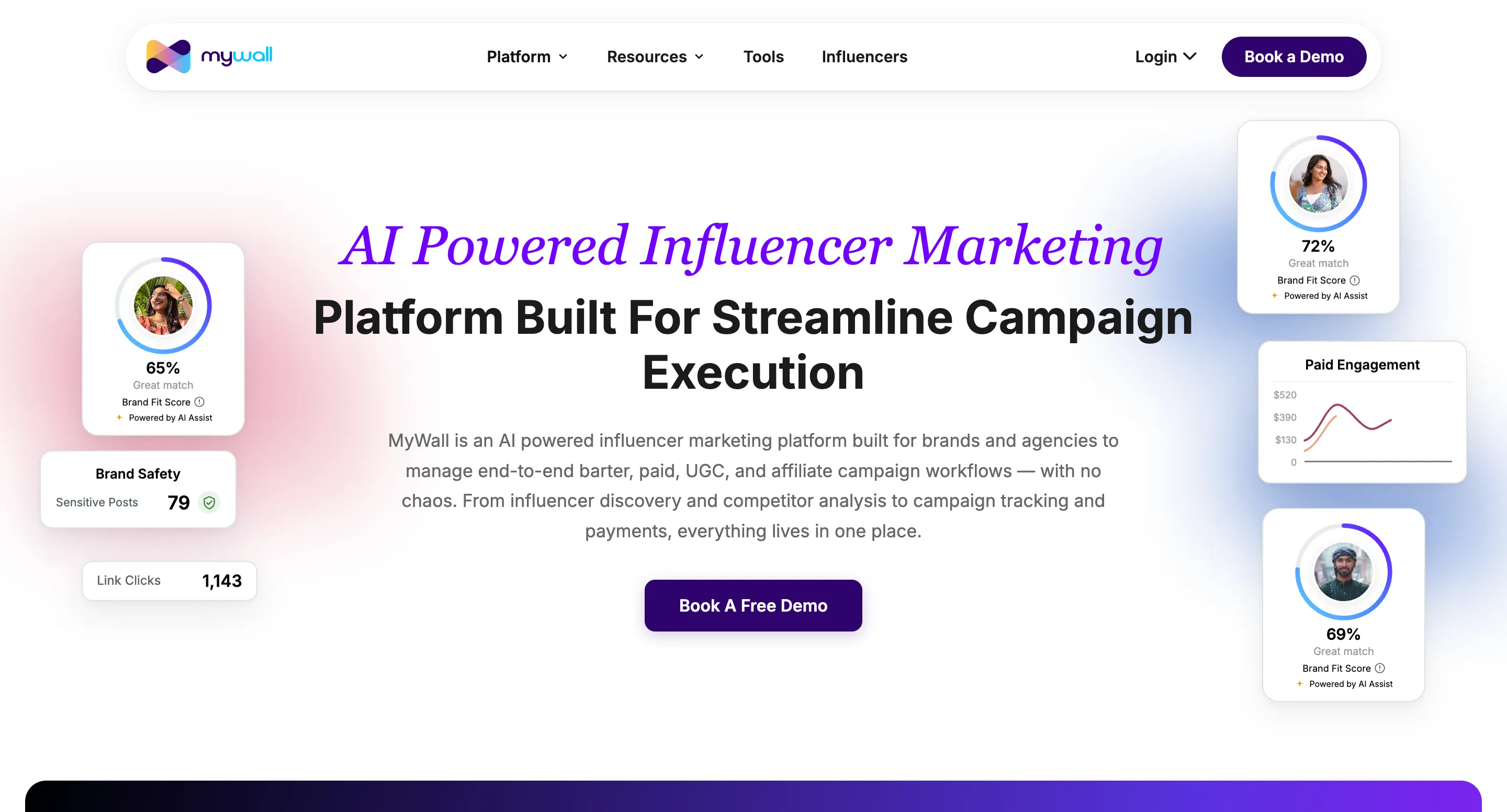
Quick Overview: MyWall is an AI-Powered influencer marketing platform and creator management software built around a specific idea: paid, barter, affiliate, and UGC campaigns shouldn't need four different tools. It runs all of them through one dashboard, one creator database, and one reporting layer, which sounds simple but is genuinely the part most influencer search platforms in this category still get wrong.
Where It Excels
- A Influencer Discovery Platform with 30+ filters, including a visual content score that rates aesthetic fit, useful for beauty, fashion, and hospitality brands
- MyWall Genie, which surfaces competitor intelligence, content performance benchmarks, and saved inspiration, a layer most competitors skip
- AI Executive, which automates outreach, follow-ups, and status nudges throughout a campaign
- Native support for all four major campaign models from the same creator base
- An influencer marketing CRM that retains full relationship history across campaign types, functioning as both influencer management software and a creator management platform in one
Things to Consider: It's a newer name in this category compared to legacy players, so the volume of third-party reviews is still building. Pricing is custom rather than published, so brands evaluating on a fixed budget will need to request a quote early in the process.
Best Fit: Growing ecommerce and DTC brands running (or planning to run) more than one campaign type and wanting AI-driven automation without enterprise-level pricing.
Editorial Take: Where MyWall stands out isn't any single feature; it's that the platform treats campaign type as a setting rather than a separate product. That architectural choice is what actually solves the fragmentation problem most brands are shopping to fix in the first place.
GRIN
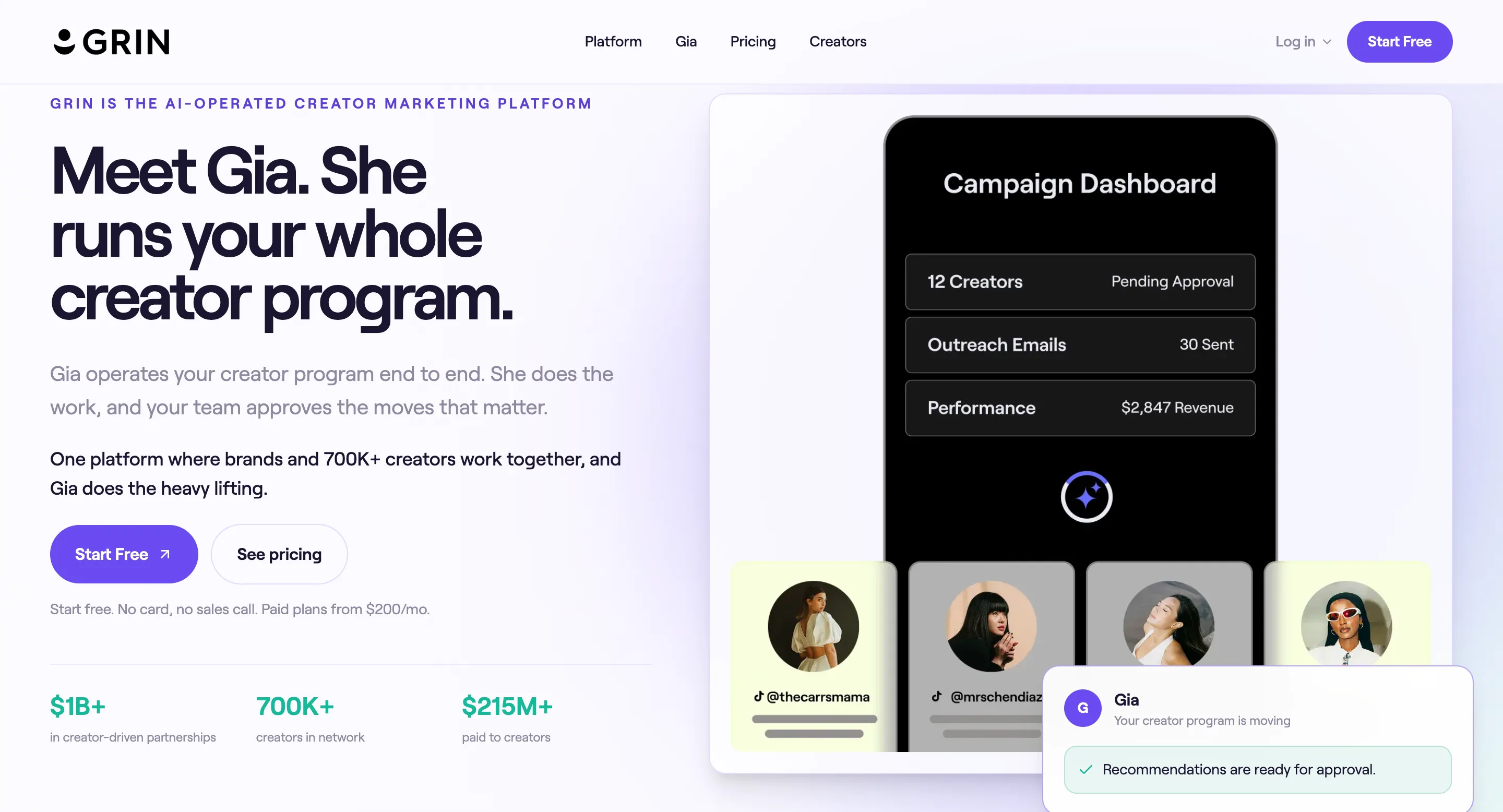
Quick Overview: GRIN built its reputation on tying creator content directly to revenue, which makes it a natural fit for ecommerce brands that need to answer "did this actually sell anything" with a real number.
Where It Excels
- Strong, well-established ecommerce integrations
- Comprehensive lifecycle coverage: discovery, seeding, content management, reporting
- Reliable revenue attribution tied to individual creators
- Well-regarded customer support among existing users
Things to Consider: The pricing is enterprise-level, generally cited around $25,000 a year, with an annual contract required and no free trial. The learning curve is real given how much the platform covers; teams should budget real onboarding time.
Best Fit: Established DTC and ecommerce brands that have already outgrown lighter tools and need influencer activity tied tightly to sales performance.
Editorial Take: GRIN earns its price tag for brands at the scale where revenue attribution is the deciding factor. It's less suited to a brand still figuring out which campaign models work for them.
Upfluence
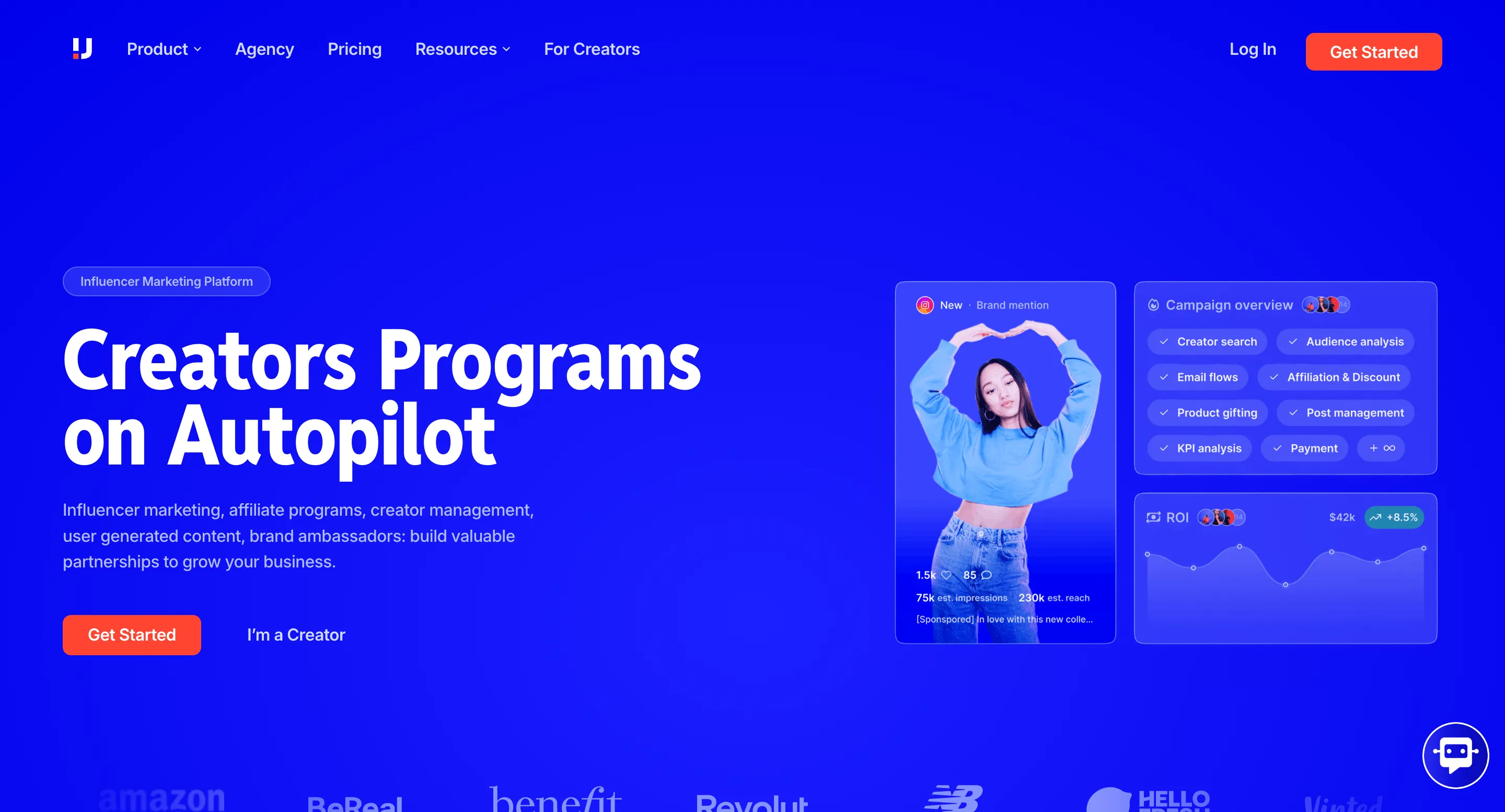
Quick Overview: Upfluence takes a different angle than most of the platforms here: instead of only searching a broad database of strangers, it analyzes a brand's existing customers to find the ones who already have a real social following.
Where It Excels
- Live Capture surfaces creators already inside your customer list
- Solid native integrations with Shopify, WooCommerce, and Klaviyo
- Useful for affiliate programs built around genuine product fans rather than cold outreach
Things to Consider: Pricing isn't published upfront; expect a range from roughly $478 to $3,000+ a month depending on scope, and the broader campaign management toolkit is thinner than some full-suite competitors.
Best Fit: DTC and ecommerce brands, especially on Shopify, whose best creator opportunity is realistically already sitting inside their own customer base.
Editorial Take: Upfluence isn't trying to be the most comprehensive platform on this list, it's solving one specific problem (finding advocates you already have) very well, and that's a legitimate reason to choose it over a broader tool.
Aspire
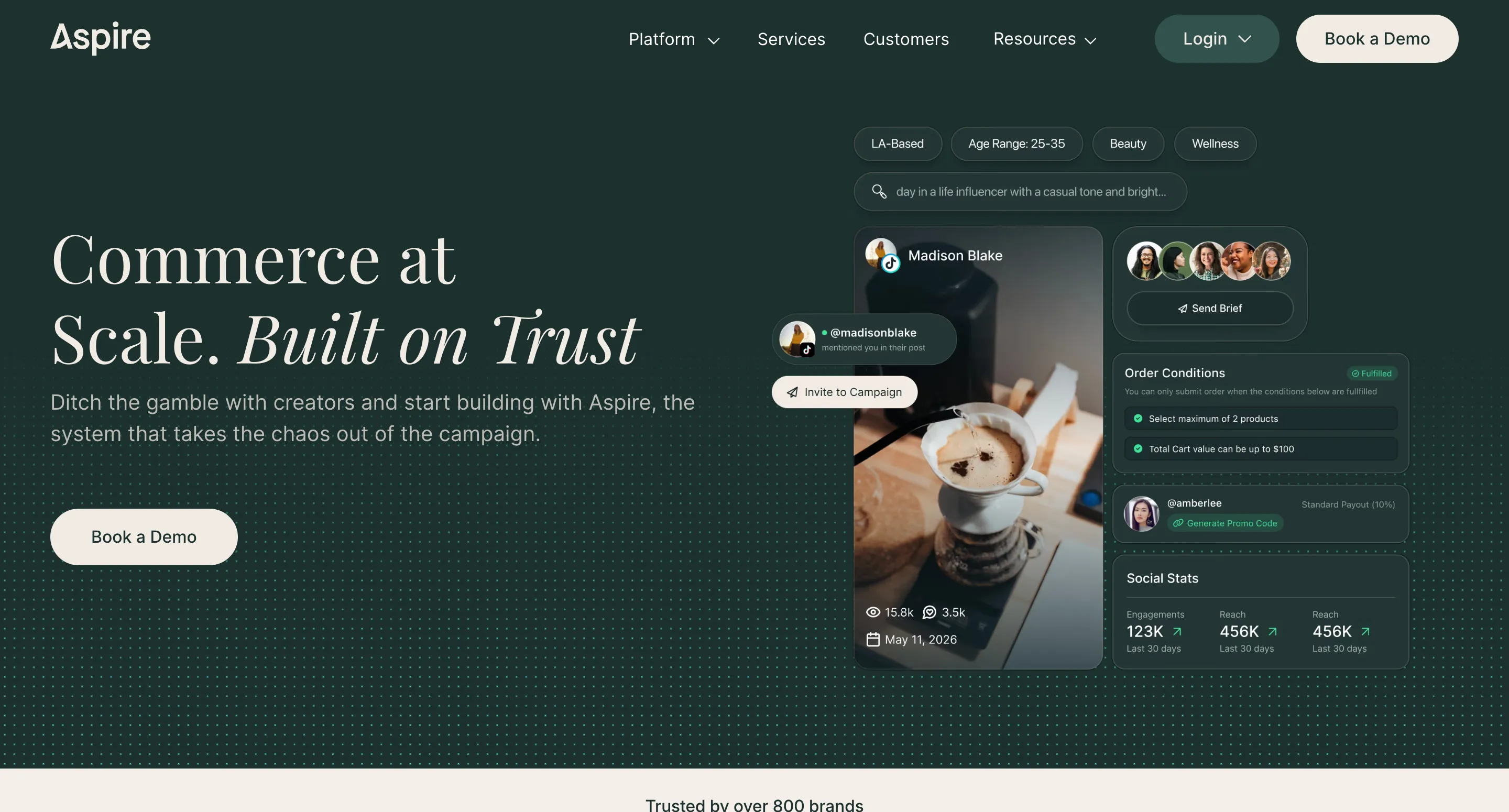
Quick Overview: Formerly AspireIQ, Aspire runs one of the larger active creator marketplaces in this category, positioning itself around what it calls word-of-mouth commerce.
Where It Excels
- A creator marketplace reported at over a million profiles
- Support for paid, barter, affiliate, and UGC campaign types
- Strong Shopify integration and product seeding tools
- Track record with recognizable brands running large-scale programs
Things to Consider: Pricing is per-user and climbs quickly; entry points are commonly reported between $1,000 and $2,500 per user per month, which makes it a bigger commitment than a brand running occasional campaigns typically needs.
Best Fit: Mid-market to enterprise ecommerce brands running an ongoing, dedicated creator program rather than intermittent campaigns.
Editorial Take: Aspire's marketplace scale is a genuine advantage for brands that need volume, but the per-user pricing model means it rewards brands who are already committed to running influencer marketing as a full-time function.
CreatorIQ
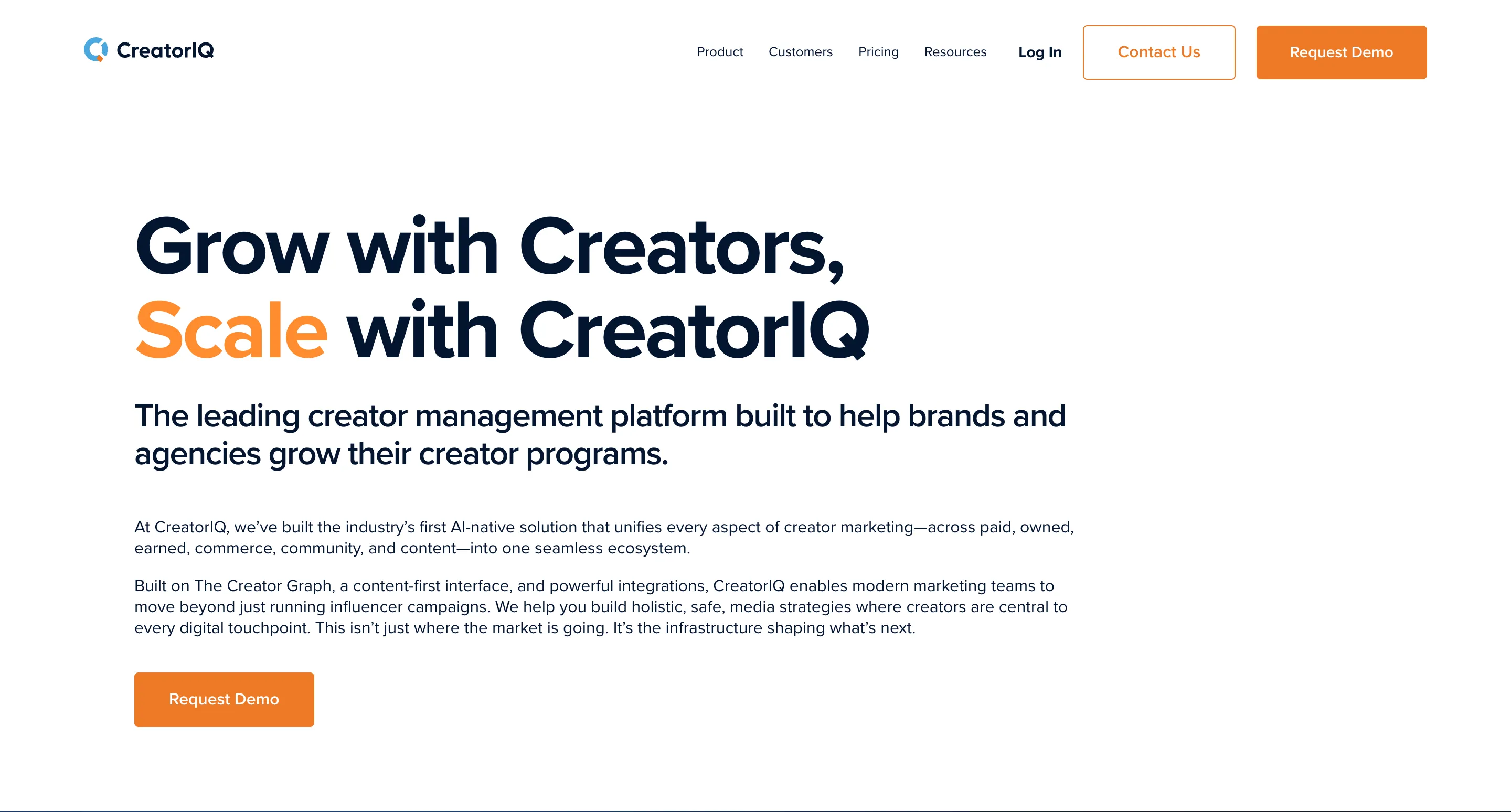
Quick Overview: CreatorIQ is built for a different tier of brand entirely: large, global, with a dedicated internal team and real compliance requirements around how creator programs get run and reported.
Where It Excels
- Institutional-grade data, fraud detection, and compliance workflows
- API-level integrations into existing enterprise martech stacks
- Reporting depth suited to board-level presentations
- Proven track record at scale with major global brands
Things to Consider: Entry-level pricing is commonly cited around $30,000 a year, with no monthly option and a longer onboarding process. This isn't built for a five-person marketing team, and it's not trying to be.
Best Fit: Large enterprise brands and agencies managing hundreds or thousands of creator relationships with dedicated staff and compliance obligations.
Editorial Take: CreatorIQ justifies its cost at the scale it's designed for. For anyone outside that enterprise bracket, the depth here is more than most teams will actually use.
Side-by-Side Feature Comparison
| Feature | MyWall | GRIN | Upfluence | Aspire | CreatorIQ |
|---|---|---|---|---|---|
| Creator Discovery | 150M+, 30+ filters | Large database | Database + Live Capture | 1M+ marketplace | Large indexed database |
| Campaign Management | Yes, unified | Yes | Yes | Yes | Yes, enterprise-grade |
| Influencer CRM | Yes | Yes | Yes | Yes | Yes |
| AI Assistance | Genie + AI Executive | Limited | Yes | Yes | Yes |
| UGC Campaigns | Yes | Limited | No | Yes | Yes |
| Affiliate Campaigns | Yes | Yes | Yes | Yes | Yes |
| Barter Campaigns | Yes | Yes | No | Yes | Yes |
| Paid Campaigns | Yes | Yes | Yes | Yes | Yes |
| Reporting | Real-time, per creator | Yes | Yes | Yes | Yes, with EMV |
| Integrations | Ecommerce stacks | Strong ecommerce | Shopify/WooCommerce/Klaviyo | Strong Shopify | API-level, enterprise |
| Ease of Use | Moderate | Moderate to steep | Moderate | Moderate | Steep |
| Best Company Size | Growing to mid-market | Established mid-market+ | Small to mid-market | Mid-market to enterprise | Enterprise |
Which Platform Should You Choose?
- Best for enterprise organizations: CreatorIQ, for the compliance tooling and reporting depth large teams actually need.
- Best for ecommerce brands focused on revenue: GRIN, if tying every creator post to a sales number is the top priority.
- Best for startups and lean teams: MyWall, since the AI automation covers work a small team can't otherwise staff for, without requiring an enterprise budget.
- Best for agencies managing multiple clients: CreatorIQ or Aspire, both built to handle volume across accounts.
- Best for AI-powered workflow automation: MyWall, on the strength of MyWall Genie's competitive intelligence and AI Executive's autonomous follow-up handling.
- Best for managing multiple campaign types at once: MyWall, since paid, barter, affiliate, and UGC all run through the same dashboard and creator database rather than separate systems.
- Best for Shopify merchants: Upfluence for customer-to-affiliate conversion, or MyWall for broader campaign flexibility alongside ecommerce integrations.
Final Thoughts
There isn't a single best platform here; there's a best fit for your specific situation. The right choice comes down to your business goals, your team's size, how many campaign types you're actually running, which tools you already depend on, and how much room you need to scale over the next year without switching software again.
CreatorIQ and Aspire suit brands operating at real scale with dedicated teams. GRIN rewards ecommerce brands that have already proven the channel and need tighter revenue attribution. Upfluence is a smart, narrower choice if your best creators are already your customers.
For brands that are still figuring out the right mix of paid, barter, affiliate, and UGC, or that are actively running all four and tired of managing them separately, MyWall's unified, AI-powered influencer marketing platform is worth serious consideration heading into the next big sales cycle, whether that's a spring launch or the holiday shopping rush. It won't be the right fit for every brand on this list- no platform is- but for a team trying to consolidate scattered tools, spreadsheets, and inboxes into one creator management platform without jumping straight to enterprise pricing, it's one of the more compelling options in this comparison.